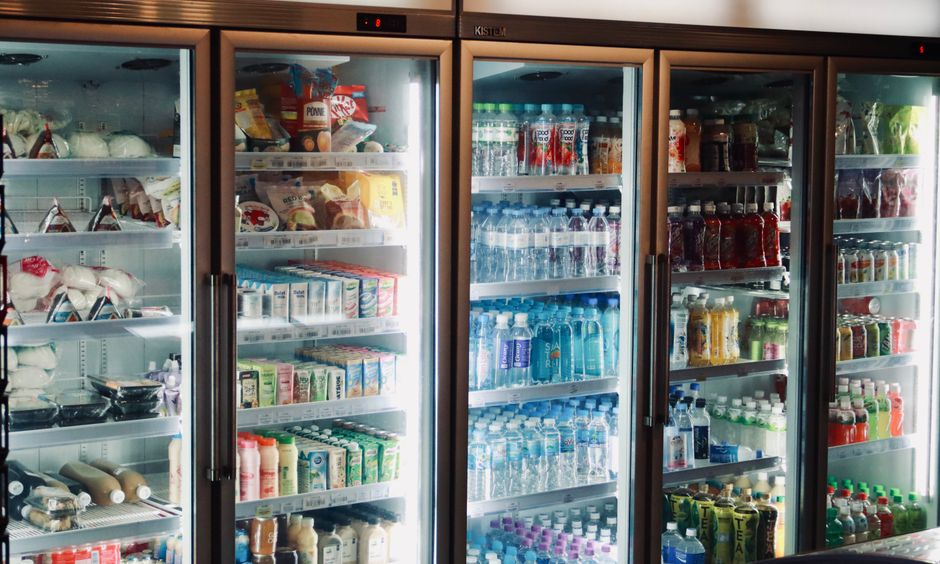
Why the “US Cold Chain Market Size, Share,Trends, Growth Analysis Report, 2031” Matters for Food & Beverage Brands
The anchor story, “US Cold Chain Market Size, Share,Trends, Growth Analysis Report, 2031” from MarketsandMarkets, matters because cold chain is no longer a back-end logistics issue. In the United States in 2026, it is a front-line commercial variable that shapes market entry, retail acceptance, channel economics, shelf-life strategy, and brand credibility. For Food & Beverage companies, especially those entering from abroad or expanding from niche to national distribution, cold chain capacity increasingly determines whether a launch can scale profitably or stall under spoilage, retailer penalties, and compliance failures.
This is particularly relevant as adjacent categories continue to expand. Supporting market signals point to momentum in functional and refrigerated-adjacent beverages, including the US Kombucha Market Size, Share & Growth Report 2035 from Market Research Future, growth in apple drink formats tracked by Market Growth Reports, and sustained expansion in beverage packaging noted by Fortune Business Insights. Add the long-run rise of organic foods and beverages from Fact.MR and a 6.4% CAGR signal in ready-to-drink beverages from Market.us, and the implication is clear: the US consumer base is broadening across premium, health-led, and convenience-led consumption occasions. That growth increases competitive pressure on fulfillment, pricing, and operational precision.
For founders and marketing directors, the strategic lesson is straightforward. You cannot treat the United States as a single homogenous launch market. The real competitive landscape in 2026 is built around route-to-market design, FDA-facing regulatory compliance, retailer expectations, and the cost-to-serve profile by channel. Cold chain is part of that equation, but so are label claims, pack configuration, margin architecture, and the competitive set you are benchmarking against.
Brands that win in the US tend to do three things well: they choose the right channel sequence, they align product specifications to regulatory and retailer requirements before launch, and they use sharp competitive analysis to determine where they can defend pricing and where they need stronger market positioning. That is the practical lens for reading the cold chain headline: not as logistics news, but as a signal that infrastructure, category growth, and channel complexity are becoming more intertwined.
The 2026 US Food & Beverage Competitive Landscape: What Has Changed
The United States remains one of the most attractive Food & Beverage markets globally, but 2026 is not a simple “launch and learn” environment. Retail buyers are demanding clearer velocity stories. Distributors are scrutinizing margin and handling burden. Marketplaces reward convenience and conversion, but can punish brands with weak compliance or packaging mismatch. At the same time, consumers continue to fragment across premium wellness, budget-conscious staples, cleaner labels, and hybrid indulgence.
Several category-level signals reinforce this complexity. The MarketsandMarkets cold chain report points to underlying infrastructure demand. The Market Research Future outlook on kombucha suggests continued interest in functional beverage formats, while Fortune Business Insights highlights beverage packaging as a growth arena, indicating that packaging is not just a cost center but a competitive instrument. In practical terms, this means Food & Beverage brands entering the United States need to benchmark not only flavor and claims, but also packaging durability, shipping viability, and merchandising fit.
For international brands pursuing global expansion, the challenge is sharper. A product that succeeds in the UK, EU, APAC, or LATAM may not map cleanly onto US price ladders, serving-size norms, ingredient expectations, or state-level operational constraints. Even where federal regulation is primary through the FDA, a brand still needs to account for retailer-specific standards, freight realities, and channel economics that vary between the Northeast, Sun Belt, Midwest, and West Coast.
In 2026, the competitive landscape is shaped by five forces:
- Infrastructure pressure: refrigerated and frozen logistics capacity influences launch feasibility.
- Premium scrutiny: consumers still buy premium products, but are more selective about value.
- Channel fragmentation: DTC, Amazon, specialty retail, grocery, foodservice, and club each require a different playbook.
- Compliance visibility: FDA and retailer requirements can derail listings if addressed too late.
- Speed to insight: brands with strong benchmark data adjust faster on pack, price, and positioning.
What Cold Chain Signals About Market Entry and Scale in the United States
Cold chain growth is a proxy for a wider structural change: more Food & Beverage products now depend on temperature-sensitive storage, fresher positioning, cleaner formulations, and more complex national distribution. Even products that are shelf-stable are affected because retailers compare all brands against rising expectations for reliability, inventory planning, and on-time performance. If a category is moving toward chilled, functional, or minimally processed formats, the operational bar rises for everyone.
For example, a kombucha brand, refrigerated juice line, probiotic shot, fresh dip, or better-for-you meal concept may have strong consumer demand but weak unit economics if it enters too broadly too quickly. Cold chain costs can erode margins through handling fees, spoilage, chargebacks, expedited replenishment, and higher slotting resistance from retailers who see operational complexity. The result is that a brand may confuse demand risk with execution risk. In reality, many launches fail not because the product lacks appeal, but because the operating model was not designed for the US market.
This is why brands should assess launch readiness across both commercial and operational dimensions. A good benchmark framework includes:
| Decision Area | Key US Question | Commercial Risk if Missed | Recommended Action |
|---|---|---|---|
| Temperature profile | Does the product require ambient, chilled, or frozen handling at every stage? | High spoilage, retailer rejection, margin collapse | Validate warehousing and last-mile partners before sell-in |
| Shelf life | How much usable shelf life remains after import, receiving, and store placement? | Short dating, markdowns, returns | Model transit and receiving windows by channel |
| Packaging | Can the pack withstand US freight, parcel, and retail handling? | Leakage, damage, poor online reviews | Test for channel-specific durability and merchandising fit |
| Label compliance | Does the label meet FDA formatting and claim requirements? | Relabeling costs, detention, legal exposure | Run pre-launch compliance review |
| Price architecture | Does the landed cost support distributor, retailer, and promo margins? | Unscalable pricing, retailer resistance | Build price ladder from COGS to shelf price |
| Competitive set | Which brands define the benchmark in your exact subcategory? | Weak positioning, poor buyer pitch | Map direct and adjacent competitors by channel |
The main strategic takeaway is that cold chain expansion should push brands to revisit assumptions about geographic rollout. A phased launch in the Northeast and West Coast may outperform a broader national push if those markets offer better logistics density, stronger category awareness, and more aligned retailer profiles. In 2026, disciplined sequencing is often more valuable than headline distribution count.
How to Conduct a Real US Competitive Analysis for Food & Beverage
Many brands say they have done a competitor review when they have only compared packaging aesthetics and retail price points. That is not enough for the United States. A useful competitive analysis must connect product, compliance, pricing, route to market, and merchandising. It should tell you not merely who competes with you, but why they win specific channels and what that means for your market positioning.
Start by defining the true category frame. If you are launching kombucha, you are not only competing with kombucha. You may also be competing with probiotic sodas, refrigerated functional drinks, wellness shots, flavored sparkling waters, or RTD teas depending on the occasion and shelf placement. If you are launching an apple drink, you may sit against juice, juice blends, low-sugar kids beverages, or premium natural refreshment formats. That broader frame matters for shelf competition and pricing elasticity.
A practical US competitive analysis should include the following dimensions:
- Channel mapping: Identify where comparable brands win: natural retail, conventional grocery, Amazon, club, foodservice, or DTC.
- Shelf-price benchmark: Track regular price, promoted price, and pack-size normalization such as price per ounce.
- Claim audit: Review front-of-pack and digital claims tied to functional benefits, organic status, sugar reduction, protein, gut health, or clean label.
- Package architecture: Compare size, format, secondary packaging, display readiness, and shipping suitability.
- Regulatory screening: Flag claim language or ingredient descriptors that could create FDA scrutiny.
- Retail evidence: Assess ratings, reviews, assortment breadth, and velocity indicators where available.
- Promotional behavior: Track frequency and depth of discounts to see where the category has trained consumers.
This is where intelligence products become commercially valuable. A founder considering US market entry can use a US Market Snapshot ($349) to get a quick read on category fit, while a more committed expansion plan may justify a full US Launch Report ($599) to map competitive white space, likely channels, and benchmark pricing in greater depth. Brands that are close to commercialization should also consider an AI Label Compliance Analysis ($599) before they print inventory or ship product into the country. That sequence reduces expensive rework later.
Pricing, Positioning, and the Economics of Entering the US Market
In 2026, pricing mistakes are one of the fastest ways to damage a US launch. Many international brands underprice because they benchmark against home-market consumer behavior, not US shelf architecture. Others overprice because they assume a premium wellness story alone will carry the brand. Neither approach is reliable. US buyers are evaluating value through a layered lens: unit price, promotional support, category familiarity, convenience, and perceived efficacy.
Price setting should begin from the shelf backward and from landed cost forward. That means building a model that accounts for import costs, warehousing, distributor margins where relevant, retailer gross margin expectations, trade spend, spoilage assumptions for chilled products, and promotional cadence. If your category depends on trial, you may need meaningful introductory pricing or TPR support. If your brand proposition is highly differentiated and the category is less promo-intensive, a premium ladder may be viable. The key is that your shelf price must be defendable within the exact peer group consumers and buyers use.
Market positioning then determines whether that price makes sense. A successful position in the US Food & Beverage market usually answers four questions clearly:
- Who is it for? Mainstream family shopper, fitness consumer, natural channel shopper, premium urban buyer, or convenience-led commuter.
- What job does it do? Refreshment, function, indulgence, nutrition, portability, or replacement.
- Why this brand? Flavor authority, formulation advantage, sourcing credibility, heritage, or format innovation.
- Why now? Diet trends, better ingredients, portion relevance, or unmet shelf need.
The strongest brands also align position with channel. For example, a premium refrigerated wellness beverage may perform first in specialty or natural retail where education is easier and the shopper is already seeking function. The same product may struggle in mass grocery if the price gap is too high and the package does not telegraph value quickly. Conversely, a broad-appeal RTD drink with simple refreshment cues may scale efficiently through grocery and Amazon if the packaging and reviews support conversion.
If your team is still testing elasticity and claims, an Amazon Listing Audit can be useful even before a full marketplace push. Amazon often reveals where consumer language, image hierarchy, and price perception are mismatched. For brands already selling through several channels, a system like BrandVault can help centralize competitor tracking and assortment changes, while Industry Intel is useful for keeping pace with category movement and buyer-relevant market developments.
Regulatory Compliance: The FDA Questions That Affect Commercial Success
Because this article is focused exclusively on the United States, the compliance discussion starts with the FDA. The most common brand error is treating compliance as a legal box to check after strategy is complete. In reality, regulatory compliance changes product-market fit, claims strategy, label design, import readiness, and even channel choice. A claim that sounds normal in another market may trigger concerns in the US. A nutrition panel formatted incorrectly can require relabeling. Ingredient naming conventions and allergen declarations can become costly friction points if discovered late.
For Food & Beverage brands, the high-priority FDA-related areas typically include:
- Nutrition Facts formatting and serving-size presentation
- Ingredient statement accuracy and ordering rules
- Allergen labeling where applicable
- Structure/function or wellness claims that may cross into problematic territory
- Identity statements and product naming conventions
- Net quantity declarations and principal display panel requirements
Compliance also intersects with operations. If a product is detained, relabeled, or challenged after shipment, the financial impact extends beyond legal exposure. It affects shelf timing, trade commitments, launch calendars, and retailer trust. For refrigerated or date-sensitive products, those delays can destroy inventory value quickly. That is another reason the cold chain headline is relevant: when products are perishable or operationally sensitive, compliance mistakes become even more expensive.
Brands preparing for US entry should build compliance into the launch process before packaging is finalized. A strong practice is to run a packaging and claims review while there is still time to make commercial design choices. The AI Label Compliance Analysis ($599) fits naturally here because it helps identify issues before inventory is committed, reducing both regulatory risk and redesign cost.
A 7-Step Market Entry Process for Food & Beverage Brands
Founders often ask for the shortest route into the US. The better question is: what is the lowest-risk path to product-channel fit? The process below is a practical framework for 2026.
- Define the category battleground. Identify your direct and adjacent competitors in the United States, not just globally. Normalize shelf pricing and pack size so your benchmark is real.
- Select the first channel, not all channels. Decide whether Amazon, natural retail, grocery, specialty, or foodservice gives the best learning-to-risk ratio for your category.
- Audit label and claims early. Validate FDA-facing packaging, ingredient naming, and claims before production locks.
- Model landed margin by channel. Build channel-specific P&Ls that include warehousing, spoilage assumptions, promo spend, and retailer or distributor deductions.
- Pressure-test packaging and cold chain needs. Simulate real US fulfillment conditions, especially if product integrity depends on temperature control or robust shipping performance.
- Launch regionally with measurable KPIs. Set success thresholds for reorder rate, reviews, promo lift, and margin retention before broader rollout.
- Use intelligence to refine expansion. Reassess your competitive set, pricing, and claims as you gather US performance data.
This is where disciplined briefing documents pay for themselves. A full US Launch Report ($599) can help leadership teams align on target channel, competitive frame, and pricing logic before spending heavily on sales outreach or inventory commitments.
Common Mistakes Brands Make in the US Food & Beverage Market
Even strong products fail when the US strategy is built on weak assumptions. These are the mistakes we see most often.
- Using global category logic instead of US shopper logic. A product can be successful abroad and still be mispositioned in the United States.
- Confusing awareness with readiness. Consumer interest in kombucha, RTD beverages, or organic products does not mean every formulation or pack format will scale.
- Underestimating channel economics. Retail margin demands, trade spend, and spoilage can turn a promising launch unprofitable.
- Setting pricing without a true benchmark. Looking only at list price rather than promoted price, pack-size equivalence, and price per ounce leads to bad decisions.
- Overclaiming on pack. Aggressive health language may create FDA or retailer friction and force costly revisions.
- Ignoring packaging as a commercial variable. The rise in beverage packaging attention, as reflected by Fortune Business Insights, should remind brands that pack function affects freight, merchandising, and online conversion.
- Launching nationally too early. Broad distribution without proof of repeat purchase and operational stability often magnifies losses.
- Treating cold chain as a vendor problem. It is a strategic design issue tied to shelf life, retailer sell-in, and gross margin.
The brands that avoid these mistakes usually build a stronger pre-launch intelligence layer. They benchmark honestly, sequence channels carefully, and make compliance part of commercialization rather than an afterthought.
What Brand Leaders Should Do Next
The Food & Beverage opportunity in the United States remains substantial in 2026, but the route to profitable growth is narrower than many brands expect. The MarketsandMarkets cold chain headline is a useful reminder that infrastructure, category growth, and competitive intensity are converging. Whether you are entering with kombucha, juice, organic beverages, RTD formats, or another Food & Beverage proposition, your US success will depend on how well you connect operational feasibility with pricing discipline, buyer relevance, and regulatory readiness.
If you are planning US global expansion, start with a clear benchmark of your category, your realistic channel sequence, and your compliance exposure. The fastest way to waste budget is to launch on enthusiasm alone. The smartest way to enter is with evidence: competitor mapping, shelf-price benchmarking, label review, and a route-to-market model built for the United States.
To assess your next move, request a personalized US Launch Intelligence Report or get a free Brand Readiness Score from US Brand Launch. It is the simplest way to see where your product stands on market entry, regulatory compliance, pricing, and competitive positioning before you commit more capital.