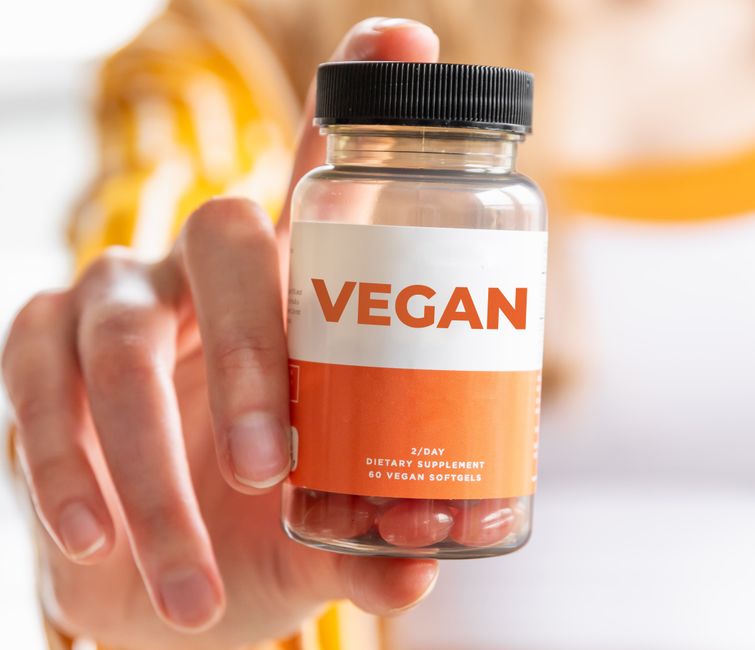
Functional Ingredients and Claims: 7 Rules Dietary Supplement Brands Must Know in the United States
The United States remains one of the most attractive markets for Dietary Supplements, but it is also one of the most scrutinized. For brands planning global expansion or first-time market entry, functional ingredients and the claims attached to them often determine whether a launch moves smoothly or creates regulatory, retailer, and platform risk. In the US, supplement marketing is governed primarily by the Food and Drug Administration under the Federal Food, Drug, and Cosmetic Act and DSHEA, with advertising oversight from the FTC. That means the ingredient itself matters, but the words used to sell it matter just as much.
For founders and marketing directors, this is not only a regulatory compliance issue. It affects market positioning, retailer acceptance, Amazon content approval, paid media performance, and long-term brand credibility. A claim that appears aggressive may improve click-through in the short term, but it can trigger warning letters, listing suspensions, or expensive relabeling. A claim set that is too conservative may miss what competitors are communicating successfully. The goal is to find the commercial sweet spot: credible benefits, legally supportable language, and differentiated positioning based on evidence.
Below is a ranked list of the seven most important rules brands should understand before launching dietary supplements in the United States.
1. Know the Three Claim Categories Before You Write a Single Label
In the US supplement category, claims generally fall into three buckets: structure/function claims, nutrient content claims, and health claims. Structure/function claims describe how an ingredient supports the normal structure or function of the body, such as “supports immune health” or “helps maintain healthy joints.” Nutrient content claims describe the level of a nutrient, such as “high in vitamin C,” but can only be used when the product meets defined criteria. Health claims link a substance to reduced risk of a disease or health-related condition and are heavily regulated, with only specific authorized or qualified versions permitted.
The biggest mistake international brands make during market entry is importing language that worked in Europe, Australia, or Asia and assuming it can be used in the US. In the American market, phrases like “prevents osteoporosis,” “treats insomnia,” or “reduces arthritis pain” generally move a supplement into drug-claim territory unless they fit a very narrow permitted framework. That distinction is crucial for pricing strategy and launch timing, because reformulating packaging after US review can delay launch by months and erode margin.
When brands conduct competitive analysis, they should compare not just ingredient overlap but also claim type. Two magnesium products may share similar formulas, yet one uses compliant structure/function language and the other drifts toward disease language. The compliant brand is far better positioned for sustainable growth across DTC, Amazon, and retail.
Takeaway: Classify every proposed statement as structure/function, nutrient content, or health claim before creative development starts.
2. Structure/Function Claims Are the Workhorse of US Supplement Marketing
Most successful US supplement brands build messaging around structure/function claims because they offer commercial flexibility without requiring preapproval from FDA. Common examples include “supports cognitive function,” “helps maintain normal energy metabolism,” “promotes relaxation,” and “supports gut health.” These claims can be powerful when anchored to well-understood consumer need states, especially in crowded categories such as sleep, immunity, beauty-from-within, and women’s wellness.
However, “allowed” does not mean “anything goes.” Structure/function claims must be truthful, not misleading, and substantiated by competent evidence. They also require the standard DSHEA disclaimer on labels and labeling when applicable: that the statement has not been evaluated by the FDA and that the product is not intended to diagnose, treat, cure, or prevent any disease. Brands must also notify FDA within 30 days of first marketing a supplement bearing a qualifying structure/function claim. This operational detail is often missed by overseas teams focused only on package translation.
There is also a strategic dimension. Claims like “supports immunity” are common and easy for consumers to understand, but they are also highly saturated. Better market positioning may come from pairing compliant umbrella language with a sharper benefit angle, such as “supports immune resilience during seasonal stress” if substantiated and carefully framed. Using a benchmark approach across category leaders can help identify where compliant language still allows room for differentiation. US Brand Launch’s Amazon Listing Audit is particularly useful here because many brands win or lose in supplements based on how claims survive platform enforcement, not just FDA theory.
Takeaway: Use structure/function claims as your primary messaging framework, but support them with evidence, required disclaimers, and a differentiation strategy.
3. Disease Claims Are the Fastest Way to Create FDA and Platform Risk
If a claim suggests that a supplement can diagnose, mitigate, treat, cure, or prevent a disease, FDA is likely to view the product as an unapproved drug. This applies not only to the front label but also to websites, Amazon A+ content, social posts, influencer language, testimonials, and even before-and-after framing. Claims such as “lowers blood pressure,” “reverses fatty liver,” “treats depression,” or “prevents flu” are high-risk examples. In many warning letters, FDA does not rely on one headline claim alone; it evaluates the totality of the marketing context.
For commercial teams, this creates a practical challenge. Consumers often search by condition, but brands cannot simply mirror those terms in product claims. The compliant alternative is to translate disease-oriented demand into permissible wellness language. Instead of “treats anxiety,” a brand may use “promotes calm” or “supports relaxation,” assuming substantiation exists. Instead of “reduces cholesterol,” a product may focus on “supports cardiovascular health,” again depending on evidence and wording. This is where effective competitive analysis matters: strong US players often build condition-adjacent positioning without crossing the disease line.
Retailers and digital platforms are becoming more aggressive as well. Amazon content moderation, payment processor reviews, and retailer legal teams often remove claims that appear too close to disease language, even before FDA engages. That means overclaiming can directly damage pricing power and customer acquisition because a suppressed listing or delayed retail reset is more expensive than a more disciplined copy strategy.
Takeaway: Avoid disease language across every consumer touchpoint, not just the label, and convert condition demand into compliant support-oriented messaging.
4. Substantiation Is Not Optional: Your Evidence File Should Match Every Claim
In the United States, substantiation sits at the center of supplement compliance. FDA expects claims to be truthful and not misleading, while the FTC expects advertisers to have a reasonable basis for objective claims before they are made. For functional ingredients, that means each claim should be backed by a documented evidence file that aligns with the actual ingredient form, dosage, target population, and route of administration in the finished product. A study on a different botanical extract at a higher dose may not adequately support your finished formula claim.
Brands entering the US often overestimate what a few published studies can do. If the evidence is preliminary, animal-only, or inconsistent, broad claims become difficult to defend. The strongest support usually comes from human clinical trials on the same ingredient form used in the product, ideally at comparable dosages. If a brand uses branded ingredients, suppliers may offer dossiers, white papers, and permissible claim guidance, but the finished-product marketer still carries responsibility for how those materials are translated into outward-facing content.
Evidence discipline also sharpens market positioning. A clinically supported ingredient can justify premium pricing if the claims are specific and credible. Conversely, a commodity formula may need a more conservative message and stronger differentiation through format, audience, or channel strategy. Brands preparing for global expansion should build a claim matrix that maps each ingredient to substantiation quality, claim type, channel restrictions, and risk rating. US Brand Launch’s AI Label Compliance Analysis can help flag where ambitious claims outrun the support present in your US-facing label and product copy.
Takeaway: Build an internal claim substantiation file for every product and ensure the evidence matches your exact ingredient, dosage, and wording.
5. Ingredient Legality Matters as Much as Claim Legality
Even perfectly written claims can fail if the functional ingredient itself raises regulatory issues. In the US, brands must assess whether each dietary ingredient is lawful for use in supplements, whether it was marketed before October 15, 1994, or whether a New Dietary Ingredient notification may be required. Ingredient status questions frequently arise with novel botanicals, concentrated extracts, cannabinoids, synthetic analogs, peptides, and ingredients with evolving enforcement history.
This is especially important for brands entering from markets where ingredient rules differ significantly. An ingredient popular in Asia or the EU may not have a straightforward compliance path in the US. Likewise, some ingredients may be permitted in foods or cosmetics in other countries but face uncertainty in US supplements. Formula review should cover identity, intended use level, safety profile, manufacturing controls, and any known warning-letter history. A product can look commercially attractive in a benchmark exercise yet still be a poor candidate for rapid US launch if its core ingredient status is unclear.
From a business perspective, ingredient legality affects channel strategy and valuation. Retail buyers, contract manufacturers, insurers, and payment partners all assess ingredient risk. If your lead SKU depends on an ingredient with unresolved regulatory questions, your market entry plan may need a phased approach: launch safer hero SKUs first, then evaluate higher-risk concepts once legal review is complete. A US Market Snapshot ($349) or full US Launch Report ($599) from US Brand Launch can help brands compare the commercial upside of ingredient-led categories against the compliance burden and competitive intensity in the US.
Takeaway: Validate ingredient permissibility early; compliant claims cannot rescue a product built around a questionable ingredient.
6. Claims Strategy Should Be Benchmarked Against Real US Competitors
A compliant claim is not automatically an effective one. Brands need to understand how similar products in the US are positioned, what benefit territories are crowded, where premium players are winning, and how language varies by channel. For example, mushroom supplements, collagen blends, and probiotic formulas often show claim clustering around “focus,” “beauty,” and “digestive support.” If every competitor uses the same broad promise, your claim stack may need to shift toward format convenience, demographic specificity, ingredient quality, or protocol-based usage rather than repeating generic functional language.
This is where rigorous competitive analysis drives better economics. Study at least 10 direct competitors across Amazon, DTC, and key retailers. Compare front-label claims, secondary claims, ingredient callouts, dosage transparency, subscription offers, review themes, and price-per-serving. You may find that a lower-cost competitor uses aggressive wording that is unlikely to survive long term, while more durable brands rely on modest but trusted claims backed by superior branding and merchandising. That distinction is essential for setting pricing and deciding whether your product should compete on efficacy perception, ingredient pedigree, practitioner credibility, or lifestyle identity.
Brands that skip claim benchmarking often misread the market. They either underclaim and appear weak next to competitors, or overclaim and create enforcement risk. US Brand Launch’s BrandVault and Industry Intel tools can support this process by tracking category patterns, claim language, assortment movement, and positioning shifts that matter to supplement brands building a US playbook.
Takeaway: Benchmark claims against live US competitors so your messaging is both compliant and commercially differentiated.
7. Compliance Must Extend Beyond the Label to Amazon, Ads, Influencers, and Retail Sales Sheets
Many brands complete a label review and assume the work is done. In the United States, that is a costly assumption. Regulators and platforms evaluate the full marketing ecosystem, including product detail pages, search ads, landing pages, email flows, affiliate content, influencer scripts, retailer sell sheets, and customer service language. A compliant bottle next to a noncompliant Amazon title or Meta ad still creates risk. For supplement companies, this is one of the most common causes of inconsistency during launch.
Claims governance should therefore be operationalized. Create an approved-claims library, a red-flag term list, and channel-specific rules for your team and external partners. Train creators not to make disease or drug-like statements, and review testimonials before reposting them. If consumers say your product “cured my migraines,” that language should not automatically become ad copy. Strong governance also improves efficiency: creative teams work faster when they know what language is precleared, and legal teams spend less time cleaning up late-stage assets.
For brands pursuing global expansion, the US should not be treated as a simple translation of an existing market. It requires a local claims workflow. This is where a combination of AI Label Compliance Analysis ($599) and an Amazon Listing Audit can add practical value before launch, helping brands align labels, listings, and conversion content under one US-standard framework.
Takeaway: Treat compliance as a cross-channel operating system, not a packaging task, and align every public-facing asset to the same approved claims framework.
Conclusion
For dietary supplement brands in the United States, functional ingredients create opportunity only when paired with disciplined claims strategy. The winning formula is straightforward: lawful ingredients, substantiated structure/function claims, clear separation from disease language, and competitive positioning grounded in actual US market behavior. Brands that get this right protect themselves from regulatory and platform friction while improving credibility, conversion, and premium pricing potential.
If your team is preparing for US market entry or wants a sharper benchmark for claims, competition, and positioning, US Brand Launch can help. Request a personalized US Launch Intelligence Report or get a free Brand Readiness Score to identify your biggest opportunities and compliance gaps before you launch.