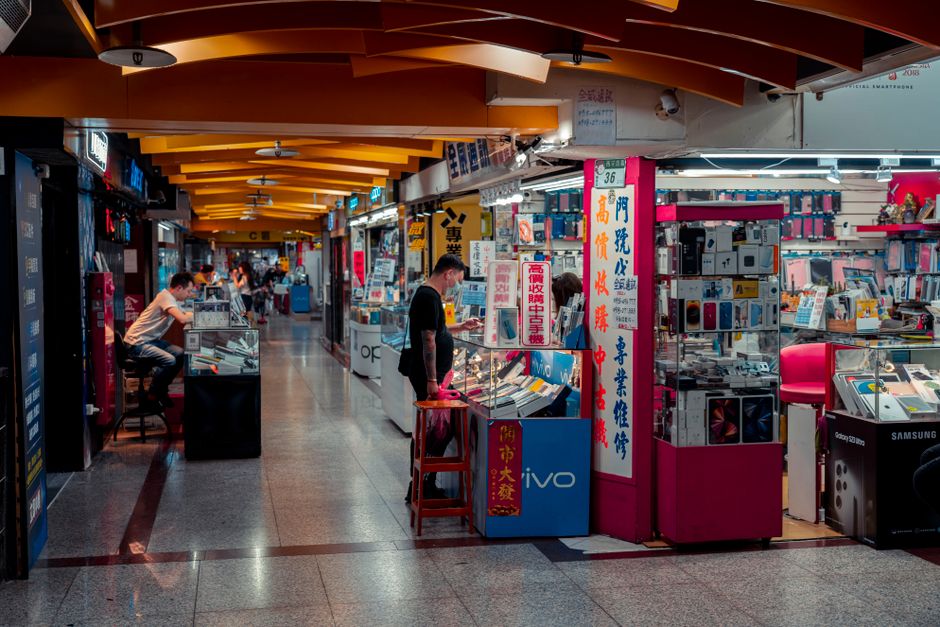
Consumer Electronics Market Size, Share, Trends, Growth, 2034 — What US Retail Channels Matter Most in 2026
The new Fortune Business Insights headline, “Consumer Electronics Market Size, Share, Trends, Growth, 2034,” is a timely signal for brands planning market entry and global expansion into the United States. In 2026, the US consumer electronics opportunity is not just about category growth; it is about choosing the right retail channels, meeting evolving listing requirements, and navigating a more complex certification environment as scrutiny around connected devices, batteries, wireless claims, and advertising substantiation increases.
For founders and commercial teams, the practical question is not whether US demand exists. It does. The question is which channels can deliver efficient velocity, acceptable margin, and retailer acceptance for your specific product format. A premium audio brand, a smart home accessory maker, and a mobile imaging device company will each face different route-to-market realities. That is where channel strategy becomes decisive.
Market Overview
The US remains one of the largest consumer electronics markets globally, supported by high household technology adoption, replacement cycles in mobile and audio devices, strong seasonal promotional periods, and mature omnichannel retail infrastructure. The broader global backdrop also remains favorable. The anchor Fortune Business Insights report points to continued long-term expansion in consumer electronics through 2034, while Statista has separately tracked steady global revenue growth in consumer electronics through 2030 and identified the leading consumer electronics e-commerce markets in 2026.
In the United States specifically, sales are concentrated across five channel groups: mass retail, marketplace e-commerce, specialist electronics retail, club and warehouse retail, and direct-to-consumer websites. Amazon remains the largest single online demand concentrator for many categories, but Walmart, Best Buy, Target, Costco, and major telecom or office chains still matter depending on product type, ASP, and merchandising story.
Below is a practical 2026 estimate of the US channel mix for consumer electronics retail sales.
| US Consumer Electronics Channel | Estimated 2026 Share of Sales | Typical Strengths | Main Watchouts |
|---|---|---|---|
| Amazon and major marketplaces | 34% | Fast launch, high search demand, review flywheel | Price competition, fee pressure, counterfeit risk |
| Mass retail chains | 22% | Scale, impulse traffic, promotional reach | Vendor setup, chargebacks, strict packaging compliance |
| Consumer electronics specialists | 16% | Higher-consideration purchases, trained staff | Harder buyer access, proof-of-demand required |
| DTC e-commerce | 12% | Better data ownership, stronger margin potential | Customer acquisition cost, returns burden |
| Club, warehouse, and wholesale | 9% | Large-volume orders, strong household reach | Sharp pricing, pack architecture constraints |
| Other retail and B2B resale | 7% | Niche access, regional testing | Fragmented accounts, distributor dependence |
Online continues to gain share, but the US market is not “online-only.” For many electronics brands, physical retail still accelerates trust, giftability, and trial, especially in categories where shoppers want to compare sound quality, screen resolution, build materials, or accessory fit.
By category, the most commercially relevant US segments in 2026 include audio, smart home, personal care tech, mobile accessories, gaming peripherals, home office electronics, wearables, and imaging accessories. The MarketsandMarkets signal on the North America consumer mobile video camera market is especially useful because it highlights continued demand in creator-oriented imaging formats, where US buyers reward ease of use, app integration, and content-ready features more than pure technical specification alone.
| Selected US Consumer Electronics Categories | 2026 Estimated Growth | Average Online ASP | Channel Fit |
|---|---|---|---|
| Wireless audio | 8–10% | $59–$199 | Amazon, Best Buy, Target, DTC |
| Smart home accessories | 9–11% | $39–$149 | Amazon, Walmart, Home Depot, DTC |
| Mobile video and creator gear | 10–13% | $79–$249 | Amazon, Best Buy, specialty photo/electronics |
| Gaming peripherals | 7–9% | $49–$179 | Amazon, Best Buy, Walmart, GameStop |
| Personal care tech devices | 11–14% | $69–$299 | Amazon, Ulta, Target, DTC |
| Portable power and charging | 6–8% | $25–$99 | Amazon, Walmart, Costco, office retail |
Opportunity Analysis
The strongest 2026 opportunities sit where functionality intersects with daily habit: creator tools, convenience tech, wellness-adjacent devices, and premium accessories with clear problem-solving value. In practical terms, brands should prioritize categories that meet at least three of these conditions:
- High search intent on Amazon or retailer sites
- Repeat gifting or upgrade behavior
- Strong visual demonstration potential
- Room for premium pricing through design or bundled features
- Low dependence on highly technical in-store education
Among the best-positioned products are wireless earbuds and speakers with differentiated battery life, creator-focused mobile video accessories, smart lighting and home sensors, personal beauty devices, ergonomic desktop tech, and fast-charging accessories. The adjacent momentum around advanced materials also matters. While not directly a mainstream retail category by itself, the Precedence Research update on the organic electronics market reflects investor and product-development interest in lighter, flexible, and more energy-efficient applications that can shape future product storytelling.
Consumer preferences in the United States are increasingly predictable:
- Convenience: simple setup, app compatibility, USB-C, wireless connectivity
- Trust: visible safety credentials, warranty clarity, realistic product claims
- Design: compact form factors, premium finishes, giftable packaging
- Content-readiness: products that support creators, remote work, or social sharing
- Value logic: not always the cheapest item, but clearly justified pricing
For pricing benchmarks, the US market remains highly elastic below $100, but margin often improves materially between $79 and $199 if the product can support stronger merchandising. Above $200, conversion drops unless the brand has robust reviews, retail validation, or a clear performance moat. Brands entering the US should build a “good-better-best” architecture early, even if only one SKU launches first. Retail buyers often want line depth on the roadmap before listing a new vendor.
If you are pressure-testing which category to prioritize, the US Market Snapshot ($999) from US Brand Launch is useful for a fast read on demand, pricing, and channel fit before committing to full inventory or buyer outreach.
Distribution Landscape
The top retail channels for consumer electronics in the United States vary by product, but most successful launches combine marketplace traction with selective retail expansion.
1. Amazon and marketplace e-commerce
Amazon is still the default first channel for many electronics brands because it offers immediate access to intent-driven demand. It also creates the social proof many retail buyers now expect before taking a meeting. Strong categories on Amazon USA include charging, audio, accessories, creator gear, desktop tech, and smart home add-ons.
However, Amazon is not frictionless. Electronics sellers must manage returns, batteries-related shipping constraints, review velocity, and content quality. Many categories require precise attribute completion, certification documentation, safety records, and image compliance. Brands that treat Amazon as a simple listing exercise usually underperform. US Brand Launch’s Amazon Listing Audit can help brands identify conversion blockers specific to Amazon USA before ad spend is wasted.
2. Best Buy
Best Buy remains one of the most important specialist chains for higher-consideration consumer electronics. It is especially relevant for audio, imaging, gaming, connected home, and computing accessories. Listing thresholds are higher than on marketplaces: buyers typically want proof of demand, margin room, a differentiated feature story, reliable fulfillment, and customer support readiness.
3. Walmart and Target
These chains matter when the product has mass appeal, sharp packaging communication, and a price point that can compete in family-oriented, gift-oriented, or convenience-led shopping missions. Walmart is particularly strong for value-driven tech accessories and practical home electronics. Target can be stronger when design, branding, and lifestyle positioning are central to the product story.
4. Costco and club retail
Costco and similar wholesale environments can deliver meaningful volume, but they usually require bundled value, highly competitive costing, and operational readiness. This is rarely the first step for an overseas entrant unless the product already has strong sell-through proof elsewhere in the US.
5. DTC websites
DTC works best when the brand needs to control education, tell a feature-rich story, capture first-party customer data, or support premium positioning. For electronics, DTC is particularly effective for new-category products, niche creator tools, or premium design-led accessories. The challenge is CAC discipline. In 2026, DTC only works well if retention, accessory attach, or email/SMS lifecycle flows improve unit economics over time.
6. Distributors and wholesalers
For brands that are not ready to build a full US sales organization, a distributor can accelerate access to regional retailers, specialty dealers, and reseller accounts. Relevant electronics distribution groups may include broadline tech and consumer goods distributors, regional CE specialists, and channel-focused wholesalers serving office, photo/video, or smart home retail. The tradeoff is margin dilution and reduced control over positioning. Brands should verify whether a distributor adds account access you cannot build directly, rather than simply acting as an order pass-through.
Common US listing requirements across major retailers include:
- GS1 barcodes and retail-ready case packs
- Product liability insurance, often $1M–$5M coverage
- Certification evidence for electrical, wireless, or battery-related products
- EDI capability or retailer portal integration
- MAP policy structure where permitted
- Returns and warranty policy documentation
- US-based customer support or response process
Regulatory Snapshot
Consumer electronics in the United States do not fall under one single approval system, but they do sit inside a web of federal rules, retailer standards, and category-specific certification expectations. The relevant authorities may include the FCC for wireless/radiofrequency devices, the FTC for marketing claims and endorsements, Customs and Border Protection for import entry, and in some cases the FDA if a product crosses into regulated medical-device territory or makes health-treatment claims.
This matters because many wellness-adjacent electronics products unintentionally create FDA risk by how they are described. A facial device, light device, posture gadget, or wearable should not claim to diagnose, treat, cure, or prevent disease unless it is appropriately regulated. Marketing language such as “heals acne,” “treats depression,” or “clinically cures pain” can trigger problems if the product is really intended as a general wellness or beauty device rather than an FDA-cleared medical device.
The compliance picture is also shifting. The Startup Fortune report on the FCC vote to change how a large share of US electronics gets certified is a notable 2026 signal for brands selling connected or wireless products. Even if the full commercial effect plays out over time, it reinforces the need to review testing, certification partners, and technical file quality before launch.
Core compliance checkpoints for US consumer electronics include:
- Correct FCC authorization path for wireless or RF-emitting devices
- Battery transport and labeling compliance where lithium batteries are involved
- Truthful, substantiated advertising under FTC standards
- Country-of-origin and import documentation accuracy
- Clear warranty terms and customer support disclosures
- Retailer-required safety testing, often including UL or equivalent evidence
- Avoidance of prohibited medical or deceptive performance claims
Estimated compliance costs vary significantly by product complexity. A simple non-connected accessory may only need baseline import, labeling, and retailer documentation. A wireless device with batteries and app connectivity can easily require several thousand dollars in testing and documentation, with more complex products running much higher. A realistic planning range for many imported electronics SKUs is $3,000 to $15,000+ for testing, documentation, and launch-ready compliance preparation, with timelines of 6 to 16 weeks depending on product type, revisions, and lab scheduling.
Where product packaging includes foreign-language content, US-facing label adaptation is often overlooked. If your packaging or inserts are not built for US retail standards, Label Translation and the AI Label Compliance Analysis ($999) from US Brand Launch can reduce risk before buyer review or import clearance.
Launch Difficulty Score
For most brands, US consumer electronics is attractive but not easy. Demand is strong, but channel competition and compliance expectations raise the execution bar.
| Dimension | Score (0–100) | Interpretation |
|---|---|---|
| Demand | 84 | Large market with broad online and offline demand |
| Competition | 32 | Very crowded; differentiation is essential |
| Regulatory Ease | 58 | Moderate complexity; rises sharply with wireless, battery, or health claims |
| Margin Opportunity | 63 | Healthy in premium accessories and DTC, tighter in mass retail |
| Overall Launch Difficulty Score | 67 | Promising market, but requires disciplined channel and compliance planning |
Actionable Next Steps
- Choose one lead channel first. Start with Amazon, DTC, or a specialist retail target based on your ASP, complexity, and review-readiness. Do not attempt every channel at once.
- Audit certifications before outreach. Confirm FCC, battery, and retailer safety documentation early. Missing paperwork can kill buyer momentum even when demand is strong.
- Build a US pricing ladder. Define MSRP, wholesale, Amazon net margin, promo floor, and bundle strategy before speaking to a distributor or retailer.
- Localize your claims and packaging. Remove risky medical language, clarify warranty terms, and ensure your inserts and PDP content match US expectations.
- Create proof of velocity. Even modest Amazon traction, strong review quality, or creator-led conversion data can materially improve retail buyer conversations.
- Target buyers with channel logic. Best Buy for high-consideration tech, Walmart for value and utility, Target for design-led products, and specialty distributors where direct access is limited.
- Invest in market intelligence before inventory scales. The full US Launch Report ($3,499) from US Brand Launch is the right fit when you need a complete read on demand, competition, channel strategy, and regulatory compliance before committing to US expansion.
Sources
- Fortune Business Insights — Consumer Electronics Market Size, Share, Trends, Growth, 2034
- MarketsandMarkets — North-America Consumer Mobile Video Camera Market Size, Share, Trends, Growth Analysis Report, 2030
- Statista — Revenue in the consumer electronics market worldwide from 2018 to 2030
- Statista — Consumer electronics e-commerce top markets 2026
- Precedence Research — Organic Electronics Market Size to Hit USD 1,675.23 Bn by 2035
- Startup Fortune — The FCC Just Voted to Upend How 75% of US Electronics Get Certified
- US Federal Communications Commission (FCC)
- US Federal Trade Commission (FTC)
- US Customs and Border Protection (CBP)
- US Food and Drug Administration (FDA), where consumer electronics products make medical or therapeutic claims
The US Consumer Electronics market in 2026 offers real upside, but winning in the United States depends on sharper channel selection, stronger compliance preparation, and a realistic plan for retailer acceptance. If you want a tailored path for market entry, request a personalized US Launch Intelligence Report or get a free Brand Readiness Score from US Brand Launch.